Bows and Archers in the Illustrations of the Bible of Wenceslas IV
Machine translation.
This page was machine-translated from Czech. The Czech version is authoritative.
Switch to original Czech version. · Zobrazit originál článku v češtině
Dear archers, a few months ago I tried to introduce you to the pictures of Czech and Moravian archers from the army of Conrad Otto, dating from the 11th century. Today, at the urging of some friends, I have picked out a few from the enormous set of illuminations (about 800 miniatures) of the Bible of Wenceslas IV., …
Dear archers,
a few months ago I tried to introduce you to the pictures of Czech and Moravian archers from the army of Conrad Otto, dating from the 11th century.
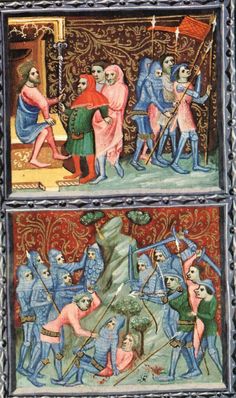
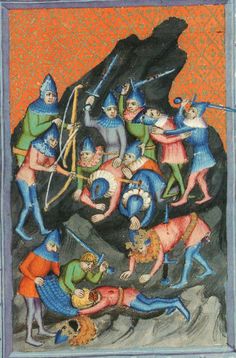
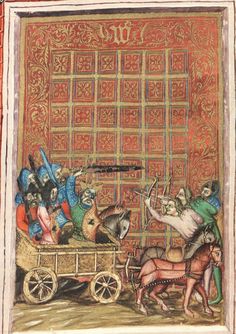
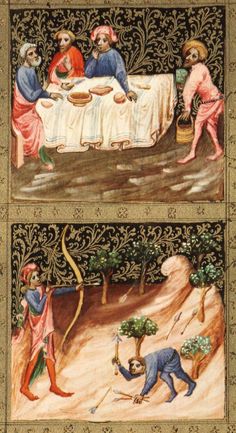
Today, at the urging of some friends, I have picked out a few from the enormous set of illuminations (about 800 miniatures) of the Bible of Wenceslas IV, King of Bohemia and of the Romans, son of Charles IV.
The book was written at Wenceslas's commission between 1390 and 1400 and was never fully completed. It was illustrated by at least nine painting workshops.
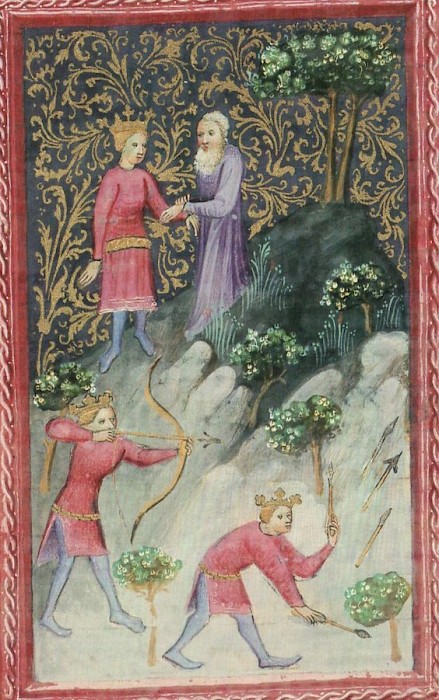
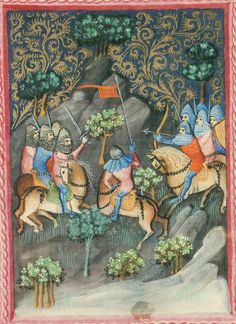
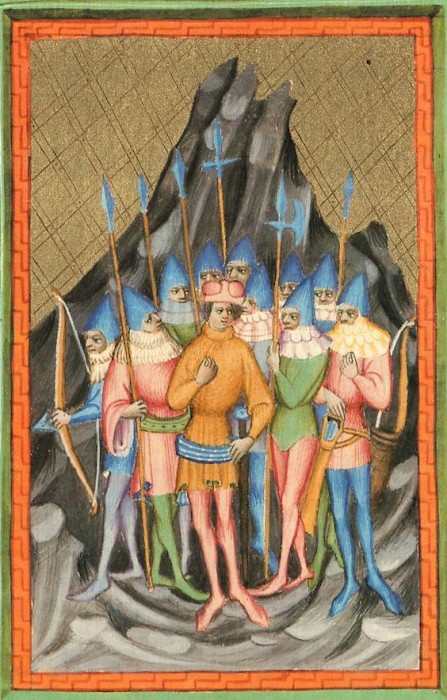
From an archery point of view, the illustrations are a rare source of instruction. The picture in the heading is interesting, depicting Ulam, son of Eshek, with his descendants-warriors.
Dr Viktor Kubík, who helped me greatly in researching the content of the picture, says: "The miniature literally illustrates chapter 8 of the Book of Chronicles (verse 40): 'And the sons of Ulam were mighty men of valour, archers, and had many sons and grandsons, an hundred and fifty. All these are of the sons of Benjamin.' As for the author of the painting, I am not sure whether he is directly identical with the painter who signed himself "Frana" (Fráňa = František, mentioned in 1401, when he bought a house in the Old Town of Prague), or (more probably) whether it is the work of his assistant. In any case, this style was immensely popular in the 1380s and 1390s, and the said "Frana" belonged to the circle of favourite artists of Wenceslas IV. In the Middle Ages the authorship of works can mostly not be tied to a single person, but rather to a workshop. In this sense it would be the workshop of the painter Frana-František." So much from Dr Kubík.
And now, why this picture interested me so much: the archer in period armour (14th century) at the far right carries, besides a recurve bow in a case, a quiver with arrows that corresponds practically exactly to the ancient Turkic quiver used from the early Middle Ages, for example in what is now Mongolia and elsewhere, as confirmed by the quivers preserved from the burials of the steppe mounted warriors there. The only difference is that the arrows were most likely stored and carried in the quivers with the points upwards. It is thus another remarkable detail influencing our ideas about Czech and Moravian medieval archery.
Yours, Luis