Turkish Traditional Archery
Machine translation.
This page was machine-translated from Czech. The Czech version is authoritative.
Switch to original Czech version. · Zobrazit originál článku v češtině
Author: Murat Özveri, DDS., PhD., translated by: Michal Sodja The roots of Turkish traditional archery reach back to the first millennium BC, to the Scythian, Hunnic and early Asian archery traditions. Mounted archers from the steppes of Central Asia used very similar archery equipment and combat strategy throughout history, and the nomadic way of life prevented any fundamental distinction between tribes and peoples. These nationalities…
The roots of Turkish traditional archery reach back to the first millennium BC, to the Scythian, Hunnic and early Asian archery traditions. Horse archers from the steppes of Central Asia used very similar archery equipment and battle strategy throughout history, and the nomadic way of life prevented any fundamental distinction between tribes and peoples. These nationalities lived in the same area, divided by many values and influences according to religion, tradition and undoubted genetic information. In the ethnic genetic melting pot of Central Asia, historians try to discover their movements by tracing linguistic paths, which is not entirely reliable. There are connecting elements in social life, religious beliefs, housing and art, as well as in hunting and fishing techniques. Over the centuries a number of civilisations appeared and disappeared from the historical scene, leaving behind a common culture and school of archery.
There is no need to stress the fact that history can be used (or not used) from various political standpoints, and that the truth has at times been twisted by historians. Although ethnic continuity is debatable, the Asian archery tradition passed through the Avars, Hungarians, Mongols, Seljuks and Ottoman Turks with increasing practical value.
According to current historiography, the word "Turk" first appeared in Chinese sources at the beginning of the 6th century for the Turkic people called the "empire of the Blue Turks" (Kökturk). The modern term "Turkic" means tribes related to the Turks, or things belonging to the culture of Central Asia. Although it is not easy to trace the path back to the Blue Turks, Ottoman archery is very well documented. The high level it reached, especially in flight shooting, is the reason why the Western world knows and admires Turkish archery.
Turkish archery can be divided chronologically into three periods:
1. The archery of the pre-Islamic Turkish and Turkic tribes
2. Turkish archery of the early Islamic period
3. Turkish archery within the Islamic period
The archery of the pre-Islamic Turks and Turkic tribes
Although pre-Islamic Turkish archery is not very well described, archaeological finds by scientists from the former USSR shed light on many obscure points.
Another source of information is old paintings, reliefs and statues.
According to Gumilöv, statues in the collections of the Hermitage represent typical Turkish horse archers. The horses' tails are braided – a custom pointing to the Ottomans – and the style of clothing and saddles suggests the use of the bow and arrows on horseback.
For the early Islamic period there is an Arabic text from the 9th century in which the archery skill of the partly Islamised Turks is very well described. The skill of the horse archers, especially their ability to hit a moving target from horseback, is described in detail.
The most important source containing many details of this scene is "The Book of Dede Korkut". This book, sometimes called the "Turkish Iliad", contains epic tales, probably written down in the 12th century but with roots reaching back hundreds of years. The linguistic character of the text, and the social life and beliefs expressed in the stories, point to a transitional phase rather than a fully Islamic life.
In the Book of Dede Korkut one can find indications of how important a role the bow and arrow played in the nomadic life of the Turks. As an example of the shamanic ceremonial use of the bow and arrow, it is remarkable that a hero shot an arrow and pitched his first night's yurt at the place where the arrow landed.
The recreational aspects of archery can be found here as well. During a wedding scene the hero competes with his friend in hitting a small target with an arrow. The target is a ring.
Another thing worth mentioning is the importance of women as warriors among the pre-Islamic nomads, which Marco Polo also mentions in his travelogue. In the Book of Dede Korkut this fact is described in one of the episodes. A character named Bamsi Beyrek sets out the way in which he is looking for a bride. Among many other warrior skills, she should be able to draw two bows at once. The "heavy bows" of the heroes are also often described there, in recognition of their physical strength and for their fame.
The adoption of Islam was the result of 300 years of trade, social, religious and cultural interaction between the Muslim armies and their northern Turkish neighbours in the region called "Maveraünnehir". These clashes ended once the Turks changed their faith and script. The Turks must have noticed that the new faith attached importance to archery, a martial art that was of considerable importance in their lives. This is in accordance with the Quran, in which forty Hadiths encourage people to practise archery.
The Seljuks opened the door to Anatolia for the Turks. It was the skill of the Seljuk horse archers that gave them their destiny. Historians of the time describe them as a highly effective, mobile force with long-range weapons. They hesitated to attack the enemy and fight him in close quarters. What they preferred was a rapid attack and retreat, a strategy based on the art of horse archery. Their short recurve bows were easier to handle from horseback and gave the warriors greater mobility.
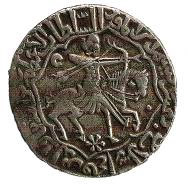
Figure 1: Further evidence of the Seljuks is a coin struck during the reign of Sultan Rukneddin (Kilicarslan). Note the Turkish and Muslim name of the Sultan: another sign of the "transitional period". Here you can see a short recurve bow and two extra arrows in the hand drawing the bow, later indicating the use of the thumb by Seljuk archers.
It is documented that each warrior carried around a hundred arrows: in the quiver, in the bow case and also in the boots. The consequences were evident in the battle against the 1st Crusade. The knights had to endure a continuous three-hour assault of arrows.
By far the best-researched period of Turkish archery is Ottoman archery. This empire was founded in 1229 by the exceptional tribal chief Osman Bey, overthrew the Roman Empire and ruled over three continents.
Ottoman archery practised various disciplines at an institutionalised level. Among these institutions, the "Okmeidan" (literally called "the place of arrows") and the "tekke" predominated, where archery was practised as a sport from the beginning of the 15th century. Despite Anglo-Saxon literature claiming the origin of sport archery with the founding of the "Guild of St George" on the orders of Henry VIII, Ottoman archery practised the first sport archery in history and gave it rules a hundred years earlier.
The first Okmeidan was founded in Edirne, the second capital of the empire before Istanbul. It was followed by a number of others, and the most splendid was the Istanbul Okmeidan, founded by Mehmed II immediately after the conquest of the city. The sultan personally bought the land from the original owners at twice the price they asked. The sultan dedicated the place to the archers and built on it the "tekye-i rumat" (the archers' tekke). The costs of this archery facility were covered by a foundation. The tekke was respected as a sacred place and protected by law.
It is worth noting that systematic paramilitary archery training was carried out long before firearms came to dominate the world's battlefields. Flight shooting, at the very least a military discipline, was always popular, and its popularity truly grew after the development of firearms in the 17th century.
The most important archery disciplines were target shooting and flight shooting. Target shooting was further divided into three categories: puta, darb (penetration) and horse archery.
Puta was shooting at a special leather target called the "puta" at a distance of 165–250 m. The puta was a pear-shaped flat cushion filled with wool and sawdust. Marks called the bull's eye were painted on it, and small bells on the rim gave a signal when hit by an arrow. A specimen in the collection of the Istanbul Military Museum measures 107x77 cm.
This distance was considered the optimal distance at which an archer could carry out aimed shooting at an enemy. Sometimes large baskets called "puta baskets" were used for the same purpose. Small stationary or hand-held putas were used at short distances.
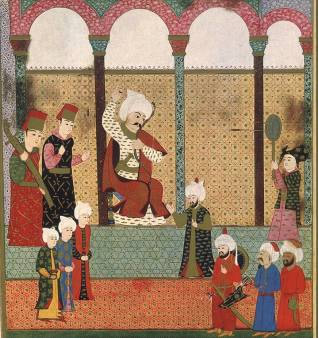
Figure 2: Sultan Selim II (1512–1520) practising on a hand-held puta, or "ayn"
(Hünername, 16th century, Topkapi Palace library)
Another variant of archery practice is "darb", which consists of shooting through hard objects. It was a combat exercise to acquire the skill of penetrating the enemy's armour. The ability of composite bows to penetrate has often been discussed, especially in the case of late medieval and early modern plate armour. Eurocentric historians often tend to highlight the military successes of English longbows during the Hundred Years' War. The military successes of the steppe civilisations are mostly ignored, while their failures are exaggerated.
Any claims that the armour-piercing ability of composite bows is weak are superstition. The Romans and the Sassanids were the first to be confronted with the reality. When the Huns invaded these two empires in the 5th century, both the Persians and the Romans had heavy cavalry in plate armour (clibanarius and cataphractos). The Roman infantry had two-layer mail armour and heavy oak shields for protection. Both states noted that the Huns had no problem piercing their armour. This was achieved by Hunnic bows with black ends. And the effect of Turkish bows, the pinnacle of Asian composite bows, is perhaps fully attested by the Habsburgs. In the memoirs of Field Marshal Montecuccoli, following Duke Marsigli, who gave a detailed report on the Ottoman army in 1682, the Habsburg army was urged to be wary of Turkish archers, since Turkish arrows are able to easily pierce the plate armour of the Austrian cuirassiers.
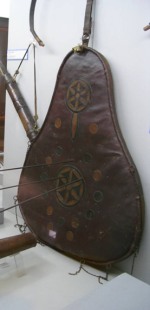
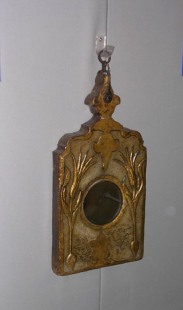
Figure 3a, 3b: A typical leather puta with a bull's eye and small bells (left); a stationary target with a beautifully carved wooden base and a metal bull's eye (right) (Istanbul Military Museum); (source: Metin Ateþ)
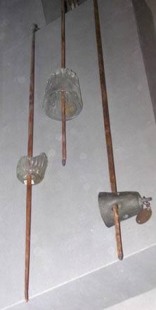
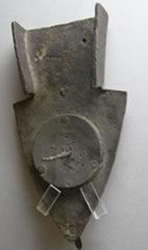
Figure 4a, 4b: Specimens of darb targets in the collection of the Military Museum in Istanbul; (source: Metin Ateþ)
Shooting at a target while riding a horse is another target discipline, and horse archery was very popular from the 14th to the 17th century. The most popular version was the so-called "qabak game", for which a special field was provided.
Although qabak is a vegetable, a number of other objects were used as the target – cups, balls and so on. The target was placed on top of a tall pole, which the archer approached at full gallop. He passed the pole, turned and shot at the target. The qabak game was not only a war exercise but also an opportunity to demonstrate skill, and a form of entertainment.
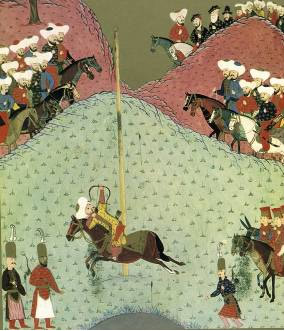
Figure 5: In this miniature Murad II is shown playing qabak before foreign envoys (Hünername, 16th century, Topkapi Palace library)
Another important discipline of Ottoman archery, flight, was the reason for the Western world's interest in Turkish archery. Flight shooting is very far removed from combat disciplines and is a sport in every respect. In my view there are three milestones that are of interest to the Western world.
In 1795 the Turkish consul in England, named Mahmud Efendi, shot three times for distance as a guest of the members of the Toxophilite Society. The distance was carefully measured, and the longest was surprisingly around 440 m, which is 100 m further than the longest range achieved so far by an English longbow. Mahmud Efendi apologised that he was not in good form, nor was his bow, and that he was moreover an amateur. He really meant it seriously, as will be seen later.
Secondly, the book Telhis-i Resail-ü'r Rumat, written by Mustafa Kani Efendi in the 19th century, was translated into German by Joachim Hein and published. Dr Paul E. Klopsteg wrote his excellent book "Turkish Archery and the Composite Bow" in the 1930s based on this translation.
Telhis-i Resail-ü'r Rumat was written by Mustafa Kani bin Mehmed on the orders of Sultan Mahmud II, who was also an excellent archer. The book was dedicated to the sultan as a handwritten text and a few years later, in 1847, published in Istanbul. This book consists of a number of detailed pieces of information and a number of illustrations on archery, bow-making and arrow-making.
1. The first sport and recreational archery in history. Many Okmeidans were founded at the beginning of the 15th century.
The first Okmeidans were founded at the beginning of the 15th century in Edirne and Bursa. The Istanbul Okmeidan was founded by Sultan Mehmed II in 1453, immediately after the conquest of the city.
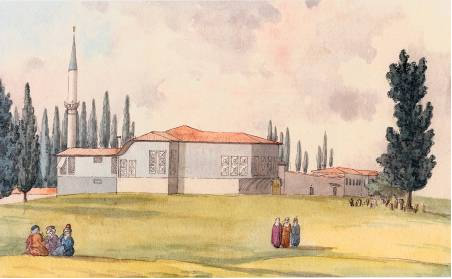
Figure 6: This illustration was created by Carl Gustav Löwenhilm, who stayed in Istanbul in the 1820s as an envoy.
2. The institution called the "tekke" served as a place where archery was systematically taught. The admission and dismissal of students was governed by ceremonial rules.
Tekke literally means an institution where dervishes live and are educated in the knowledge of Sufism (Islamic mysticism). Another meaning is a place/institution where sports such as wrestling or archery are practised and taught. It is very similar to present-day sports clubs.
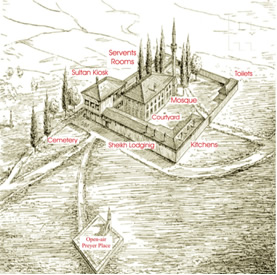
Figure 7: This picture represents a tekke, as drawn by Halim Baki Kunter in 1938 according to a description in an old manuscript (Eski Türk Sporlari Üzerine Arastirmalar, 1938).
Kunter was one of the most important archery researchers of the republican era. The archaeological excavations, which began last year, helped to find the foundations of all these buildings apart from the toilets. They confirmed the results of Kunter's work.
The beginning and the end of basic archery education were ceremonially celebrated and announced. The admission of a student was formalised at the "small Qabza admission ceremony" and the graduation at the "Great Qabza admission ceremony".
A student's skill could be declared only when he was able to shoot a pishrev arrow 900 gez (594 m), or an azmayish arrow 800 gez (528 m). This shot had to be made in front of at least 4 people, two at the shooting position and two at the place where the arrow landed. The archer was then entered in the register book of the Tekke and recognised as trained. One of these books has survived to this day.
During the great Qabza ceremony the master dropped the bow (grip) into the hands of the newly designated kemankes, symbolising the passing of archery knowledge from one generation to the next.
3. The moral and mystical aspect of training
The Okmeidan and the tekke were regarded as sacred places and highly respected. The Muslim ritual of personal purification called "abdest", which must precede daily prayers, was performed before entering the Okmeidan as though the place were a temple. Although there was discrimination among the social classes of the Ottoman Empire, in the Okmeidan everyone was equal, as in any temple. Every visitor, even the sultan, was a competitor under the same conditions and rules.
Another example of the mystical aspect of training was the use of "Ya Hakk!", the call of the "flight" shooters, meaning "hey God!". It works much like the so-called "kiai" in the Japanese martial arts, and it seems plausible that both have the same purpose.
Another point of archery mysticism is the interesting symbolism of the morphology of the bow. The upper bow limb represents "good" or "holiness", while the lower one represents "evil". The grip – the gabza – joins these two opposing tendencies of the universe and of man himself. The centre of the grip, where a small piece of ivory or bone (chelik) is inserted, is a symbol of the so-called "vahdet-i vücud", a Sufi term for the shared identity of the whole universe and all creatures; a projection of God.
The symbolic importance of the qabza makes the bow a ceremonial instrument during the "Great Qabza admission ceremony". It also represents the transfer of knowledge to a new generation. The graduation of the students is expressed by placing the bow into the hands of the new kemankes. For this symbolic reason all archers begin and end their daily training with a ceremonial kiss of the grip of their bow.
4. The Turks developed the "peak bow" of the Central Asian school
The Ottoman bow is a recurve composite bow, like other bows originating in Central Asia. Made from wood (mostly a kind of maple), sinew, horn and glue, this bow is the shortest of all, measuring only 41–44 inches. Only the Korean bow is comparable to it in length. Its performance is considerable with both heavy and light arrows, which give the Ottoman "flight" bow the greatest range ever known. Making each bow requires considerable skill and patience. Because organic material takes a long time to dry, one must wait 1–3 years before the bow is finished.
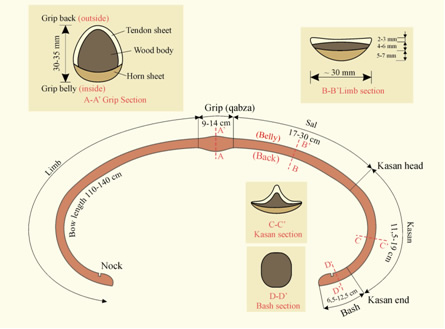
Figure 8: Profile and cross-section of a Turkish bow (collection of Dr Mustafa Kacar)
5. Purely sporting disciplines such as "flight" existed and were practised long before firearms gained precedence and turned the bow and arrow into sports equipment.
Civilian archery institutions such as the tekke and the Okmeidan were created at the beginning of the 15th century. Besides training areas, the tekke offered extensive social facilities such as a dormitory, a dining hall, a library and a common room. Thanks to these activities it had a character similar to a modern sports club. "Flight" was very popular even at a time when bows and arrows were used on the battlefields.
"Kemankes", or trained archers, practised regularly and hard, just like today's professional athletes. It is known that the best of them were paid or sponsored by the Palace.
6. Long-distance shooting reached distances of over 800 m
Records in "flight" are very well documented. According to Muslim rules, a record was valid only if at least 4 people were present. Each shot, or "menzil", was marked by two stones, the first, the "foot stone", set up at the archer's position and the "main stone" marking the distance reached. Employees of the Okmeidan were present as witnesses at all attempts. The distances achieved were not only entered in the register book of the tekke, but stone monuments were also erected in commemoration.
- Tozkoparan Iskender 1281, 5 gez (845 m)
- Mir-i Alem Ahmed Aga 1271, 5 gez (839, 18 m)
- Bursali Suca 1243, 5 gez (820, 71 m)
- Tozkoparan Iskender 1279 gez (844, 14 m)
- Parpol Hüseyin Efendi 1207 gez (796, 62 m)
- Cullu Ferruh 1223 gez (807, 18 m) Lenduha Cafer 1209, 5 gez (798, 27 m)
- Sultan Mahmud II 1228 gez (810, 48 m), 1225 gez (808, 5 m), 1219 gez (804, 54 m)
7. Monumental stones, each of them a work of art and a document, were erected to commemorate and announce these records.
The monumental stones were called "menzil stones". Each of these stones had a poetic text carved into it, containing the name of the archer, the distance achieved and the date of the record. The date was recorded in a special way using the "ebced". These texts are therefore an outstanding example of Turkish poetry and calligraphy.
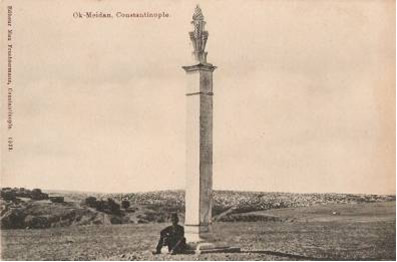
Figure 9: The record stone of Sultan Mahmud II. The photograph was taken in the 19th century (collection of Prof. Dr Atilla Bir and Dr Mustafa Kacar)
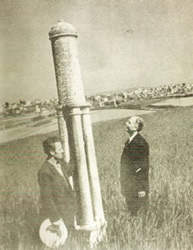
Figure 10: Photograph of the menzil of Besir Aga, erected in commemoration of his 630 m shot. What makes the photograph more interesting is that the person on the right is Dr Paul Ernest Klopsteg on his visit to Istanbul in 1930 (collection of Prof. Dr Atilla Bir and Dr Mustafa Kacar)
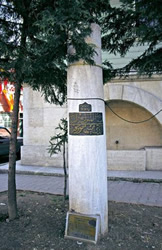
Figure 11: This is the stone of the brilliant feat of Iskender "Tozkoparan". The distance is 846 m and the year 1550 (collection of Sinasi Acar)
Unfortunately the Turkish archery tradition was coming to an end. It probably began together with the social, cultural and economic decline of the Ottoman Empire over the last 200 years.
In 1914 the empire entered the First World War and the army turned the Okmeidans into barracks, although for centuries any disturbance had been forbidden by the orders of the sultans. In 1925 a law banned all Sufi activities. All the tekke, which had the character of sports clubs, were closed. Ataturk, the founder of the new Turkish Republic, commissioned several men descended from old kemankes families to reorganise modern Turkish archery. Okspor, the first archery club of the republican era, was founded in 1937, but closed in 1939, just a year after Ataturk's death. Modern Turkish archery has followed FITA rules since the 1950s and uses modern equipment. This school of archery continues to this day.
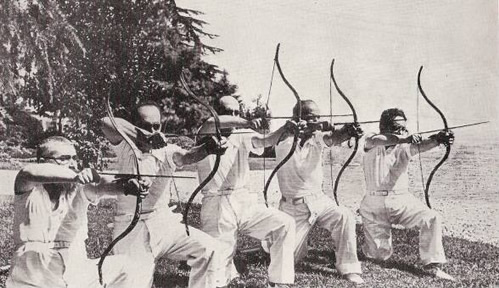
Figure 12: A rare photograph showing members of Okspor. An interesting thing is that this picture shows the transitional period of a rapidly modernising Turkey. Traditional archery equipment is combined with Western clothing. (H. B. Kunter, Eski Türk Sporlari, 1938)
Recently our traditional archery has been reviving again. The rebirth of traditional Turkish archery rests on the personal efforts of a few men. Thanks to old treatises and a limited number of enthusiasts from around the world, the original techniques and equipment are being rediscovered in a short time. At present the number of enthusiasts and practitioners is growing rapidly. In the near future it will not be surprising to see Turkish archers with their composite bows and thumb rings.
- Author: Murat Özveri, DDS., PhD.
- Translated from English by: Michal Sodja
- Source: Turkish Traditional Archery, Part 1: History, Disciplines, Institutions, Mystic Aspects